Before you confiscate the phone
A changed child needs boundaries—but first, they need a parent who is safe to talk to.
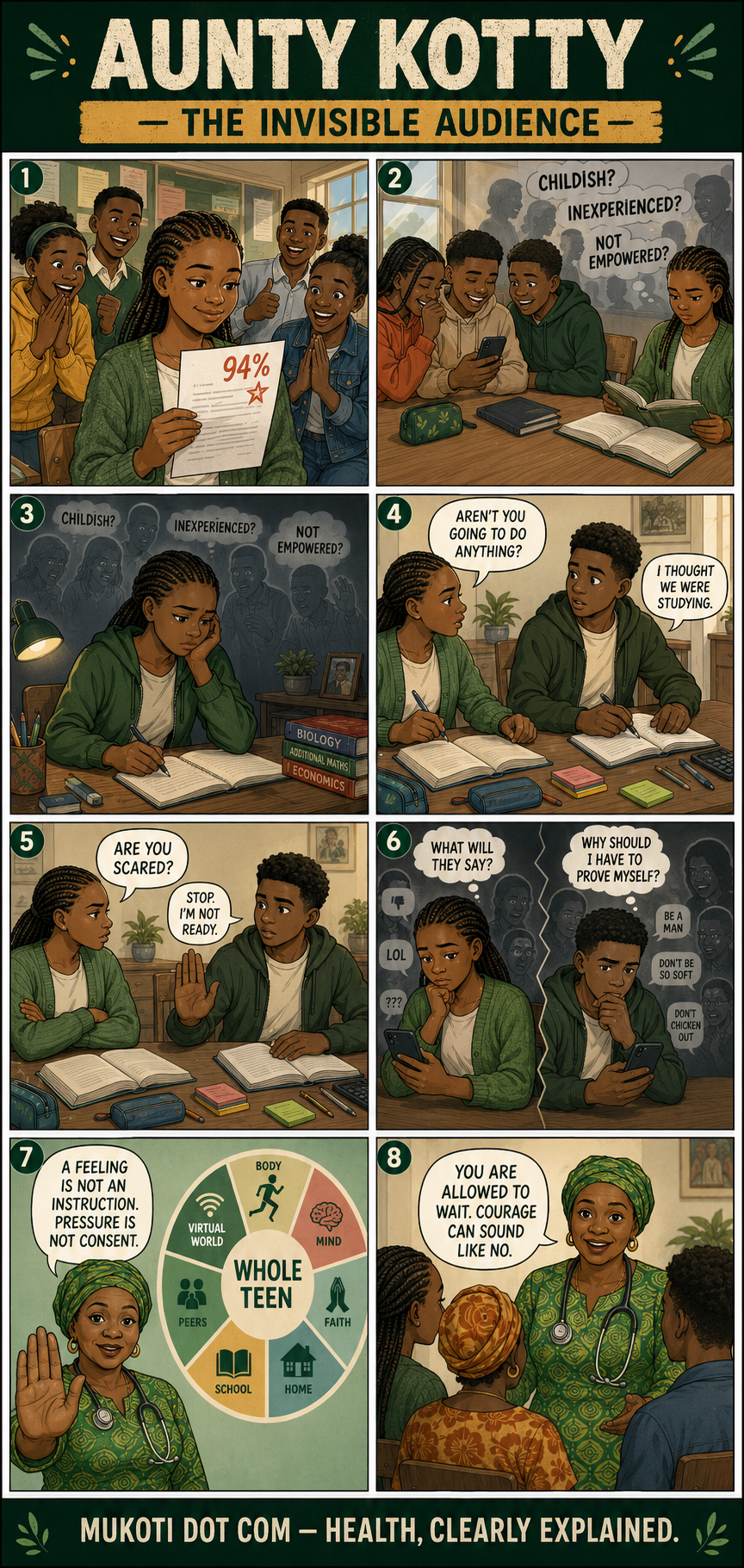
The new phone may be what you can see. The invisible audience of peers may be what is really changing your child.
A usually open, cheerful learner returns from a school trip with a new urgency: she wants the latest phone, hides the one she has, talks constantly about who is dating whom, and becomes defensive when her mother asks ordinary questions.
It is tempting to seize the phone and deliver a sermon. But Aunty Kotty asks us to pause. A sudden change does not prove sexual activity, abuse or wrongdoing. It is a signal to become more present, more observant and more available.
“Do not let your first reaction become the reason your child never tells you the second half of the story.”
What may be happening?
- Puberty is changing the body, emotions and awareness of how others see them.
- Friends may be redefining “mature”, “popular” or “empowered”.
- Online approval can make an ordinary phone feel like a passport to belonging.
- A child may be testing independence—or hiding pressure, bullying, grooming or fear.
Open the conversation
- “I have noticed that you seem different lately. How are things with your friends?”
- “What happens if somebody in your group does not want to date or do what the others are doing?”
- “Has anyone asked you for a photograph, secret or meeting that made you uncomfortable?”
- “You will not be punished for telling me the truth. We will work out the next step together.”
Then state the family position clearly
Listening does not mean surrendering your values. A Zimbabwean parent can say, calmly: “In this home we believe that childhood must be protected. We encourage abstinence, respect for your body, respect for other people’s boundaries and focus on the future God has given you. I will also give you truthful health information, because silence does not protect you.”
Make a safety plan together
- Agree on phone boundaries: appropriate hours, private spaces, photographs, contacts and apps.
- Keep real-life supervision: know the friends, adults, destinations and arrangements around visits and trips.
- Create an exit sentence: “My mother is calling me,” or “I am not comfortable with this,” can help a child leave pressure without debating.
- Identify safe adults: a parent, aunt, uncle, teacher, counsellor, nurse or pastor who responds without shaming.
- Act promptly on danger: threats, sexual images, coercion, unexplained gifts, contact with unknown adults, self-harm talk or fear of a particular person need immediate safeguarding support.
This fictional composite does not portray a real child, family or school. It provides general health, parenting and safeguarding education—not personal medical, psychological, legal or pastoral advice. If a child may be in immediate danger, contact an appropriate local health, safeguarding or emergency service promptly.